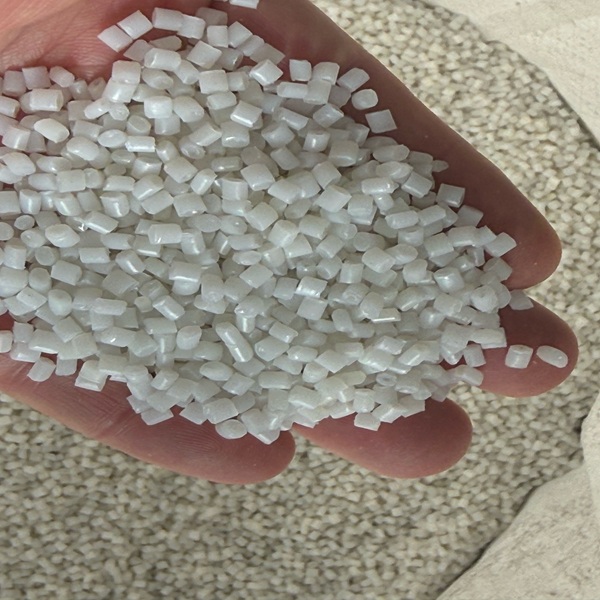
PCR PP Pellets
Professional PCR PP & rPP manufacturer Swanpoly. Our certified recycled polypropylene (PCR PP, rPP) offers excellent performance, eco-friendliness & global compliance for lab, packaging & industrial use.
Our PCR PP (post-consumer recycled polypropylene) and rPP (reinforced or recycled polypropylene) are eco-friendly, high-performance materials.
They are produced by Swanpoly.
They are engineered to meet the varied needs of industries worldwide.
Adhering to global standards and certifications, Swanpoly's PCR PP and rPP offer strong mechanical properties, chemical stability, and sustainability. They are ideal alternatives to virgin PP.
Whether for laboratory consumables, industrial equipment, or environmental protection projects, Swanpoly's PCR PP and rPP deliver reliable performance while supporting your carbon reduction goals.
Product Specifications
1. PCR PP (Post-Consumer Recycled Polypropylene)
Specification Item | Parameter Range | Description |
|---|---|---|
Form | Pellets / Sheet / Customized | Pellets for injection molding; sheet for thermoforming; customizable per client requirements |
Recycled Content | ≥30% (up to 100% customizable) | Made from post-consumer waste (such as disposable tableware), Swanpoly's PCR PP offers consistent quality. |
Melting Point | 160-170℃ | Consistent with virgin PP, suitable for standard processing equipment |
Density | 0.90-0.91 g/cm³ | Lightweight, reducing product weight and transportation costs |
Processing Temperature | 180-220℃ | Compatible with injection molding, extrusion, thermoforming processes |
Color | Natural, White, or Customized | Color stability, no discoloration during processing |
rPP (Reinforced / Recycled Polypropylene)
Specification Item | Parameter Range | Description |
|---|---|---|
Form | Pellets / Molded Parts / Corrugated Sheets | Widely used in industrial equipment, tower packing, and structural components |
Reinforcement Type | Glass Fiber (10-40%), Mineral Filler | Enhanced stiffness and impact resistance, like virgin reinforced PP, with Swanpoly's strict quality control. This helps ensure stable rPP performance in all scenarios. |
Temperature Resistance | -30℃ ~ 110℃ (short-term 120℃) | Stable performance in harsh temperature environments |
Density | 0.92-1.10 g/cm³ | Adjustable based on reinforcement content |
Model | 125Y, 250Y, 350Y, 450Y (for tower packing) | Classified by specific surface area for different industrial scenarios |
Performance Indicators
1. PCR PP Performance
Performance Indicator | Parameter | Advantage |
|---|---|---|
Tensile Strength | 25-35 MPa | High toughness, not easy to break, suitable for structural parts |
Impact Strength (Izod, Notched) | 5-15 kJ/m² | Good impact resistance, adapting to complex working conditions |
Flexural Modulus | 800-1200 MPa | Excellent rigidity, maintaining shape stability |
Chemical Stability | Resistant to acids, alkalis, organic solvents | Suitable for harsh chemical environments |
Carbon Footprint | Reduced by ≥20% vs virgin PP | Complies with global low-carbon and environmental protection requirements |
Cleanliness (for lab use) | No DNase, RNase, pyrogen, PCR inhibitor | Meets USP Class VI standards and is suitable for PCR consumables. Swanpoly's advanced production technology ensures PCR PP is very clean. It does not interfere with experiments. |
2. rPP Performance
Performance Indicator | Parameter | Advantage |
|---|---|---|
Compressive Strength | ≥6.5 N/mm² | High load-bearing capacity, suitable for industrial equipment |
Specific Surface Area | 125-450 ㎡/m³ | Enhances mass transfer efficiency in tower equipment |
Void Fraction | 93%-98.5% | Low pressure drop, high flux, energy-saving |
Vicat Softening Temperature | ≈150℃ | Heat-resistant, suitable for high-temperature operations |
Cycle Life | 1.8x longer than virgin PP | Durable, reducing replacement costs, a core advantage of Swanpoly’s rPP that distinguishes it from ordinary recycled polypropylene materials. |
Main Applications
1. PCR PP Applications
Laboratory Consumables: PCR tubes (0.2 mL single tubes and 8-strip tubes), 96-well and 384-well PCR plates, and PCR sealing films. Suitable for routine PCR, qPCR, and sample storage. Complies with PCR Clean and Sterile standards, no background fluorescence interference.
Packaging Industry: Food packaging, cosmetic packaging, plastic containers, and packaging films. Meets global sustainable procurement standards of Amazon, Walmart, IKEA, and Costco.
Automotive Industry: Interior trim parts (door panels, dashboard accessories), reducing vehicle weight and carbon emissions.
Daily Necessities: Disposable tableware, plastic buckets, storage boxes, and toys, achieving environmental protection and cost savings.
2. rPP Applications
Industrial Tower Equipment: Corrugated packing for absorption, desorption, desulfurization, and washing towers. It is widely used in the chemical, environmental protection, metallurgical, and petroleum industries.
Data Center Equipment: Remote Power Panels (RPP) provide end power distribution. They ensure stable power to servers and network equipment. They offer high reliability and precise monitoring.
Environmental Protection Projects: Waste incineration flue gas treatment equipment, acid regeneration units, and oil-water separation systems. These systems resist corrosion and last a long time.
Structural Components: Industrial brackets, machine parts, and building materials, leveraging high rigidity and impact resistance to adapt to harsh industrial environments.
Product Advantages
✅ Eco-Friendly & Certified: Made by Swanpoly, PCR PP and rPP use recycled materials. They are certified by GRS, ISO 13485, ISO 9001, FDA, and CE. This supports your sustainability strategy and carbon reduction goals.
✅ Superior Performance: Comparable to virgin PP in mechanical properties, heat resistance, and chemical stability, with enhanced durability and cost-effectiveness.
✅ Wide Compatibility: Suitable for various processing technologies, compatible with mainstream equipment, and customizable to meet diverse international market needs.
✅ Global Compliance: Meets USP Class VI, ISO 11137, and other global standards. Applies to Europe, the United States, Asia, and other regions.